If you are looking at 49301 and wondering whether it feels more like Grand Rapids, Ada, or something in between, you are asking the right question. This area is not a simple one-town market, and that can make your home search or sale feel harder at first. The good news is that once you understand how this corridor works, you can make smarter decisions about pricing, timing, and location. Let’s dive in.
What 49301 really means
In real estate terms, 49301 works more like a corridor than a neat municipal border. It is best understood as the east-of-city suburban zone centered on Ada, with adjacent pockets of Grand Rapids Township also in the mix.
That matters because ZIP codes are approximate, while neighborhoods, parcels, utility service, and township rules can vary from one area to the next. If you rely on the ZIP alone, you can miss meaningful differences in lot size, home style, and value.
Why this area feels distinctly suburban
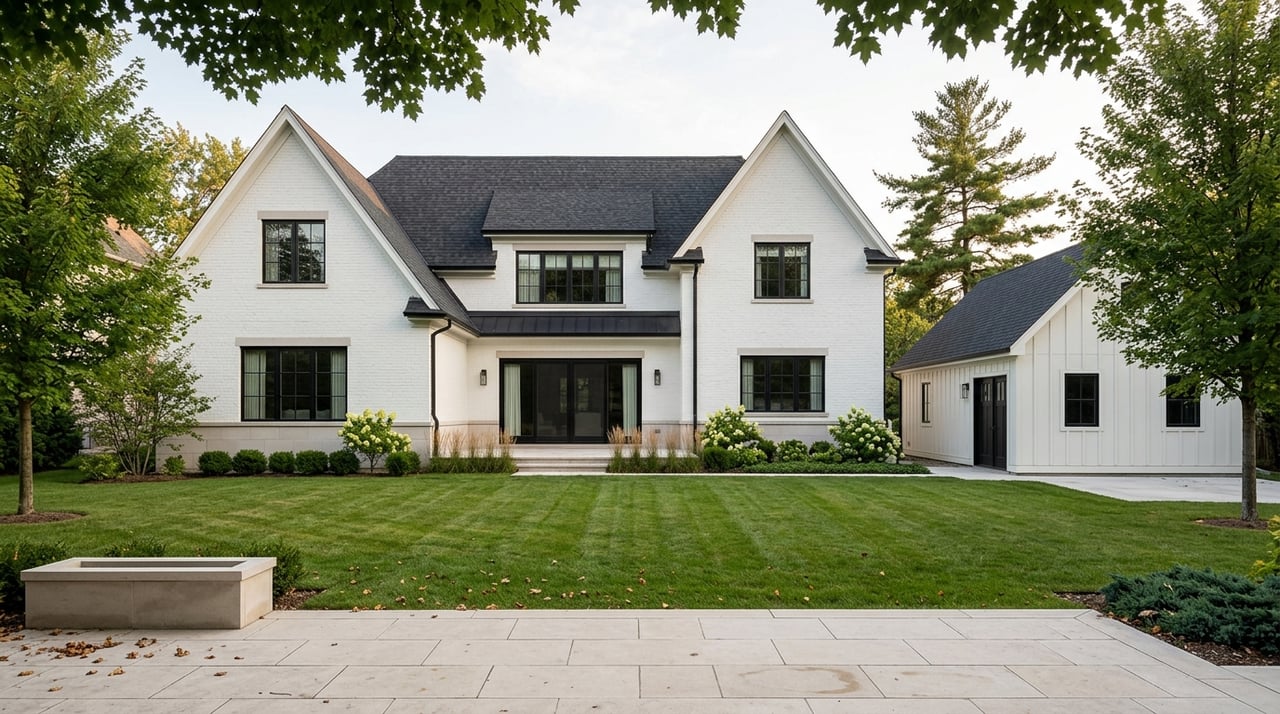
The 49301 market is overwhelmingly made up of single-family homes. About 93.0% of housing units are one-unit detached, while only a small share falls into attached or multifamily categories.
The ownership pattern also reinforces that suburban feel. Owner occupancy is high across the corridor, including 95.6% in 49301, 85.1% in Grand Rapids Township, and 92.8% in Ada Township.
This is also a relatively established market. Median age is 41.6 in Grand Rapids Township and 41.5 in Ada, which points to a stable, mature suburban setting rather than a fast-turnover urban core.
Housing stock spans several eras
One reason the market feels layered is that the homes were built across several decades. In 49301, nearly 60% of the housing stock dates from 1990 or later, including 27.2% built from 2000 to 2009, 17.7% from 1990 to 1999, and 13.7% from 2010 to 2019.
That means you may see a wide range of home styles and condition levels as you tour. Some properties offer newer layouts and finishes, while others may sit on older footprints with updates completed over time.
Grand Rapids Township planning data show a similar pattern. About 43% of units there were built between 1990 and 2010, while 37% predated 1980 and 20% were built in the 1980s.
Lot sizes depend on more than the address
A common mistake in this market is assuming all suburban homes come with similar lot sizes. In reality, lot size often depends on zoning and whether a property has public water, public sewer, or private systems.
In Grand Rapids Township’s SR district, minimum lot area is 18,000 square feet on well and septic. That drops to 12,000 square feet with either public water or sewer, and 10,200 square feet with both utilities.
In the R-1 district, the minimum lot area can be 8,400 square feet where public water and sanitary sewer are available. As a practical takeaway, many utility-served subdivision lots may be around 0.2 acre, while suburban-residential or nonutility settings often run larger.
Current prices place 49301 in a premium bracket
If you are moving east from Grand Rapids proper, the price jump can be significant. In March 2026, Redfin reported a 49301 median sale price of $698,000, up 14.8% year over year.
Spring 2026 snapshots from Realtor.com showed about 55 to 58 homes for sale, with median list prices in the mid-$700,000s to low-$800,000s. Median days on market were roughly 28 to 36 days, and homes were selling close to asking on average.
Zillow’s late April 2026 value index for 49301 was $652,456. The owner-occupied value mix also leans high, with 36.9% of owner units in the $300,000 to $499,999 range, 40.6% in the $500,000 to $999,999 range, and 7.8% at $1 million or more.
How it compares to Grand Rapids
For perspective, Grand Rapids citywide had a median sale price of about $304,000 in March 2026. That means buyers looking in 49301 are shopping in a very different price tier than the urban core.
This gap helps explain why the east-of-city suburban market attracts buyers who are prioritizing space, detached housing, and a more suburban land pattern. It also means pricing strategy matters, because expectations from one area do not always transfer neatly to another.
Grand Rapids Township vs Ada
Within this broader corridor, Grand Rapids Township and Ada do not sit at the same value point. Grand Rapids Township’s median owner-occupied housing value is $426,600, while Ada Township’s is $544,700.
In simple terms, Grand Rapids Township is often the more attainable east-side option. Ada tends to sit at the more premium end of the spectrum.
That does not mean one is always better for every buyer or seller. It means your goals, budget, and preferred lot or home style should guide the conversation more than the ZIP code alone.
Where Forest Hills fits in
Forest Hills can be a useful comparison point when you are trying to narrow your search. Redfin’s March 2026 Forest Hills snapshot showed a median sale price of $565,000, which sits below the 49301 median sale snapshot.
For many buyers, Forest Hills serves as a middle reference when comparing east-side options. It can help you evaluate whether your budget fits best in Grand Rapids Township, Forest Hills, Ada, or a mix of all three.
What buyers should watch closely
This market rewards buyers who look past the listing photos and study the property details. Because the same ZIP can include different land patterns and zoning setups, the parcel itself matters a great deal.
Before you write an offer, it helps to confirm:
- Utility type
- Lot width and depth
- Whether the property is in an R-1, SR, PUD, or site-condo setting
- How the parcel compares with nearby homes
These details can affect how the home lives today and how it may fit your plans over time.
School boundaries need parcel-level review
This is another area where general assumptions can create problems. There are multiple school districts inside the township, so district lines should be checked parcel by parcel.
If school assignment is part of your home search, use the official attendance and district maps before making decisions. In a corridor like this, district boundaries can affect both value and buyer interest.
Buyers should be ready to move quickly
Inventory remains limited enough that hesitation can cost you options. In spring 2026, 49301 had only about 55 to 58 homes for sale, and the median market time stayed under five weeks.
Well-priced homes in strong condition can still draw fast attention. That is especially true for updated, move-in-ready properties and for newer or larger-lot homes that line up with what buyers in this corridor often want.
What this means for sellers
If you are selling in this market, the opportunity is strong, but precision matters. Buyers in premium price brackets tend to compare carefully, and they often look closely at condition, lot characteristics, utility setup, and how your home fits within its immediate pocket of the corridor.
That means your pricing strategy should reflect the specific parcel and property, not just the 49301 label. Presentation matters too, especially in a market where buyers are paying close attention to whether a home feels move-in ready.
The big takeaway for 49301
The Grand Rapids Township suburban market is best understood as a layered east-side corridor. It is detached-home dominant, heavily owner-occupied, and shaped by a mix of township patterns, utility service, lot configurations, and price tiers.
For buyers, the smartest move is to compare specific parcels instead of relying on the ZIP alone. For sellers, the advantage comes from positioning the home accurately within its true submarket.
If you want a clear read on how a specific home, lot, or neighborhood pocket fits into this market, Brenda H Pratt offers the kind of thoughtful, personal guidance that can make the process feel much more manageable.
FAQs
What kind of housing is most common in 49301?
- Single-family detached homes dominate the 49301 market, accounting for about 93.0% of housing units.
How expensive is the 49301 market compared with Grand Rapids?
- In March 2026, the median sale price in 49301 was $698,000, compared with about $304,000 citywide in Grand Rapids.
Are all 49301 properties part of the same community?
- No. The 49301 ZIP functions more like an east-of-city corridor that includes Ada-centered areas and adjacent pockets of Grand Rapids Township.
Do lot sizes vary in Grand Rapids Township and 49301?
- Yes. Lot sizes can vary based on zoning and utility service, with smaller minimum lots in utility-served districts and larger minimums in areas using well and septic.
Is Grand Rapids Township usually more affordable than Ada?
- Generally, yes. Grand Rapids Township has a lower median owner-occupied housing value than Ada Township, making it a more attainable option for many east-side buyers.
Why should buyers verify school boundaries in this area?
- Multiple school districts exist within the township, so district lines should be checked for each parcel rather than assumed from the ZIP code alone.